
Canada continues to be the top study destination for Indian students in 2026 — and for good reason. World-class universities, post-study work opportunities, and a clear pathway to permanent residency make Canada a dream destination. But getting your Canadian student visa (officially called a Study Permit) right is crucial.
In this guide, we break down everything you need to know — from eligibility and documents to costs and timelines — so your application is strong from day one.
What Is a Canada Study Permit?
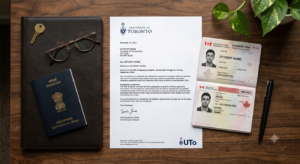
A Canada Study Permit is the official document that allows international students, including Indians, to study at a Designated Learning Institution (DLI) in Canada. Without it, you cannot enrol in most post-secondary programs in Canada.
Important: A study permit is different from a Canadian student visa. Most Indian passport holders also need a Temporary Resident Visa (TRV) or an Electronic Travel Authorization (eTA) to enter Canada. In most cases, these are issued together automatically when your study permit is approved.
Am I Eligible for a Canada Student Visa in 2026?
To be eligible for a Canadian study permit as an Indian student, you must:
- Have a Letter of Acceptance (LOA) from a Designated Learning Institution (DLI)
- Prove you have sufficient funds to cover tuition, living expenses, and return travel
- Have no criminal record and be in good health
- Convince the visa officer that you will leave Canada at the end of your studies
- Meet the language requirements (IELTS, TOEFL, PTE, or equivalent)
The minimum funds required (as of 2026) are approximately CAD $20,635/year for living expenses, in addition to your tuition fees.
Step-by-Step: How to Apply for a Canada Student Visa from India
Step 1: Get Admission to a Designated Learning Institution (DLI)
Research and apply to Canadian universities or colleges listed as DLIs. Popular choices among Indian students include University of Toronto, University of British Columbia, McGill University, and colleges like Conestoga and Humber. Once accepted, you’ll receive your Letter of Acceptance — the most important document in your application.
Step 2: Create Your IRCC Account
Go to the Immigration, Refugees and Citizenship Canada (IRCC) website and create a secure online account. This is where you’ll submit your application and track its progress.
Step 3: Gather Your Documents
Having the right documents is where most Indian applications succeed or fail. Here is what you need:
- Valid Indian passport (valid at least 6 months beyond your intended stay)
- Letter of Acceptance from your DLI
- Proof of financial support (bank statements, GIC certificate, sponsor letter)
- Statement of Purpose (SOP) — why you chose this program and this institution
- Academic transcripts and certificates (10th, 12th, graduation)
- Language test scores (IELTS Academic, TOEFL iBT, PTE Academic)
- Passport-size photographs
- Medical examination results (from a designated panel physician)
- Biometrics (collected at a Visa Application Centre in India)
- Police Clearance Certificate (if applicable)
Step 4: Pay Application Fees
The Canada study permit application fee is CAD $150 (approximately ₹9,300). The biometric fee is CAD $85 (approximately ₹5,250). Note that these fees are non-refundable.
Step 5: Submit Your Application Online
Fill in the IMM 1294 (Application for Study Permit Made Outside Canada) form on your IRCC account, upload all documents, and submit. Double-check every detail — errors are a leading cause of delays.
Step 6: Provide Biometrics
After submitting your application, you will receive a biometric instruction letter. Book an appointment at the nearest Visa Application Centre (VAC) in India (available in New Delhi, Mumbai, Chandigarh, Hyderabad, and other cities) within 30 days.
Step 7: Complete Your Medical Examination
You must complete a medical exam with an IRCC-approved panel physician. The exam results are valid for 12 months, so time this appropriately.
Step 8: Wait for a Decision & Receive Your Study Permit
Once approved, you’ll receive a Port of Entry (POE) Letter of Introduction. Your actual study permit is issued at the Canadian border/airport when you arrive.
Canada Student Visa Processing Time from India in 2026
Processing times vary, but for Indian applicants in 2026, expect:
- Online applications: 4 to 16 weeks on average
- Applications with biometrics: Add 2–4 weeks if biometrics weren’t previously collected
- Peak seasons (January–March and July–September): Timelines may stretch further
Apply at least 3–4 months before your program start date to be safe.
Canada Student Visa Financial Requirements: What’s Enough?
This is where many Indian applications fall short. IRCC looks for:
- Guaranteed Investment Certificate (GIC): CAD $20,635 deposited with a participating Canadian bank (required for most provinces under the Student Direct Stream)
- Bank statements: Last 6 months, showing consistent funds — not a sudden large deposit
- Tuition fee payment proof: Receipt of the first year’s tuition (or at least a payment acknowledgement from the institution)
- Sponsor documents: If your parents or relatives are sponsoring, include their ITR, salary slips, and bank statements
Student Direct Stream (SDS) — The Faster Route for Indian Students
The Student Direct Stream (SDS) is a faster processing track designed specifically for Indian students applying from India. To qualify:
- You must be a legal resident in India
- You must have a GIC of at least CAD $20,635
- You must have paid the first year’s tuition in full
- You must have a language test score of IELTS 6.0 (no band below 6.0) or equivalent
- You must complete your medical exam upfront
SDS applications are typically processed in 20 business days — significantly faster than the regular stream.
Common Reasons Indian Students Get Their Canada Visa Rejected
- Weak Statement of Purpose that doesn’t clearly explain study plans
- Insufficient or unconvincing financial documents
- Chosen institution or program not matching your academic background
- Applying too close to the intake date
- Ties to home country not adequately demonstrated
- Biometrics or medical exam not completed on time
Post-Study Work in Canada: What Happens After You Graduate?
One of the biggest draws for Indian students is the Post-Graduation Work Permit (PGWP). After completing your studies at an eligible DLI, you can work in Canada for up to 3 years. This work experience can then be used to apply for Canadian Permanent Residency through Express Entry.
Frequently Asked Questions
Q: Can I apply for a Canada student visa without IELTS?
Some institutions accept alternative language tests like TOEFL, PTE, Duolingo, or offer internal assessments. However, IELTS is the most widely accepted and recommended.
Q: Can I work while studying in Canada on a student visa?
Yes. As an international student with a valid study permit, you can work up to 24 hours per week off-campus during academic sessions and full-time during scheduled breaks.
Q: What is the Canada student visa rejection rate for Indians in 2026?
The refusal rate varies by province and institution type. Working with an experienced immigration consultant can significantly reduce this risk through proper document preparation.
Q: Can my spouse come with me to Canada?
Yes. Your spouse may be eligible for an Open Work Permit as a dependent if you are enrolled in a full-time graduate-level or professional program at a DLI.
Q: Is there an age limit for a Canada student visa?
There is no official age limit, but you must be enrolled in a qualifying program and demonstrate genuine intent to study.
Final Thoughts: Set Your Canada Journey Up for Success
Applying for a Canadian student visa is not just about filling forms — it’s about building a compelling case for why you are a genuine student with the means, the intent, and the academic preparedness to succeed in Canada.
At Focus Overseas, our team has guided thousands of Indian students through every step of the Canada study permit process. From choosing the right DLI to preparing your SOP and financial documents, we’re with you at every stage.
Ready to start your Canada journey? Contact us today for a free consultation.
Disclaimer: Immigration rules change frequently. Always verify requirements on the official IRCC website or consult a licensed immigration consultant before applying.