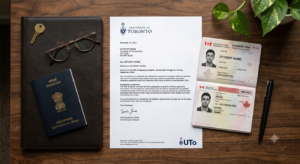


Canada Permanent Residency (PR) is one of the most sought-after goals for Indian professionals and families. It opens the door to free healthcare, excellent public education, social benefits, and a clear pathway to Canadian citizenship. In 2026, Canada’s immigration system — driven primarily by Express Entry — continues to evolve, with new category-specific draws changing how Indians can approach their PR journey.
Here is a comprehensive, up-to-date guide to Canada PR for Indians in 2026.
What Is Express Entry?
Express Entry is Canada’s online immigration management system used by IRCC (Immigration, Refugees and Citizenship Canada) to select skilled workers for Canadian Permanent Residency. It manages applications under three federal programs:
- Federal Skilled Worker Program (FSWP) — for skilled workers with foreign work experience
- Federal Skilled Trades Program (FSTP) — for certified tradespeople
- Canadian Experience Class (CEC) — for those with Canadian work experience
Eligible candidates create an Express Entry profile, receive a Comprehensive Ranking System (CRS) score, and sit in the pool. IRCC conducts regular draws — selecting candidates above a cutoff score and issuing them Invitations to Apply (ITA) for PR.
CRS Score Explained: How You Are Ranked
Your CRS score is calculated across four main sections — here’s what contributes the most for a typical Indian applicant:
Core Human Capital Factors (up to 500 points for single applicants)
| Factor | Max Points |
|---|---|
| Age (peak: 20–29 years) | 110 |
| Level of education | 150 |
| Official language proficiency (first language) | 136 |
| Canadian work experience | 80 |
Spouse/Partner Factors (if applicable, up to 40 points)
| Factor | Max Points |
|---|---|
| Spouse education | 10 |
| Spouse language proficiency | 20 |
| Spouse Canadian work experience | 10 |
Skill Transferability Factors (up to 100 points)
Combinations of education + language, or work experience + language, or foreign work experience + Canadian work experience earn bonus points.
Additional Factors (up to 600 points)
| Factor | Max Points |
|---|---|
| Provincial Nominee Program (PNP) nomination | 600 |
| LMIA-backed job offer (NOC TEER 0 or 1) | 200 |
| LMIA-backed job offer (NOC TEER 2 or 3) | 50 |
| Canadian study credential | 15–30 |
| Sibling in Canada (Canadian citizen/PR) | 15 |
| French language proficiency | 25–50 |
What CRS Score Do You Need in 2026?
Recent Express Entry draw cutoffs in 2026:
- General draws (all programs): CRS cutoffs typically range from 480–510
- Category-specific draws (STEM, Healthcare, French, Trades): Cutoffs can range as low as 430–470
- PNP-specific draws: CRS cutoff as low as 700 (because the PNP nomination itself adds 600 points)
Key insight for Indians: Most Indian applicants without Canadian experience or a job offer fall in the 430–490 CRS range. This means the general draw cutoff is often just out of reach. Category-specific draws and PNP nominations are the most practical strategies.
Category-Based Express Entry Draws: A Game-Changer for Indians
Since 2023, IRCC has been conducting category-based draws targeting specific occupation groups and attributes. These draws have lower cutoffs and are critical for Indian applicants.
Current categories (subject to IRCC policy in 2026):
- Healthcare occupations (doctors, nurses, pharmacists, healthcare support workers)
- STEM occupations (engineers, IT professionals, natural sciences)
- Trade occupations (electricians, plumbers, welders, carpenters)
- Transport occupations (truck drivers, logistics managers)
- Agriculture and agri-food
- French language proficiency (regardless of occupation)
- Education occupations (teachers, educational support)
If your occupation falls under a targeted category, your chances of receiving an ITA improve significantly — even at lower CRS scores.
How to Improve Your CRS Score: Proven Strategies for Indian Applicants
1. Improve Your Language Score (Biggest Levers)
IELTS/CELPIP CLB 9 in all four skills is the baseline for competitive scores. CLB 10 in all bands can add 20+ points over CLB 9. If you score CLB 9 in speaking but CLB 10 in the other three, retaking speaking may be worthwhile.
Potential gain: 20–40 CRS points
2. Add a Second Official Language (French)
If you speak any functional French, investing in NCLC (French language TEF Canada or TCF Canada) certification is highly rewarding. Even NCLC 7 in all skills can add 24–50 CRS points. The category-based French draw also gives you a separate pathway.
Potential gain: 25–50 CRS points
3. Get a Provincial Nomination (PNP)
A PNP nomination instantly adds 600 points to your CRS score — guaranteeing you an ITA in the next draw. Provinces actively recruit in-demand profiles:
- Ontario Immigrant Nominee Program (OINP): STEM, healthcare, finance
- British Columbia PNP: Tech, healthcare
- Alberta Advantage Immigration Program (AAIP): Trades, healthcare, tech
- Saskatchewan, Manitoba, Nova Scotia, New Brunswick: Various skilled worker streams
Many PNP streams do not require you to already be in Canada — you can apply as an Expression of Interest from India.
Potential gain: +600 CRS points (game-changing)
4. Secure an LMIA-Backed Job Offer
A valid job offer from a Canadian employer with LMIA approval adds 50 or 200 CRS points depending on the NOC TEER level.
Potential gain: 50–200 CRS points
5. Gain Canadian Experience (if already in Canada on a study/work permit)
Even one year of full-time Canadian work experience can add 40–80 CRS points and makes you eligible for the Canadian Experience Class (CEC).
6. Get a Canadian Credential
Completing a degree or diploma at a Canadian institution adds 15–30 points. For many Indians who study in Canada, this combined with PGWP work experience can be a complete PR strategy.
Step-by-Step: How to Apply for Canada PR from India via Express Entry
Step 1: Take your language test (IELTS Academic or General, or CELPIP)
Step 2: Get your Educational Credential Assessment (ECA) done through an approved body (WES, IQAS, etc.) — mandatory for foreign degrees
Step 3: Create your Express Entry profile on IRCC’s website and receive your CRS score
Step 4: Enter the Express Entry pool and wait for draws
Step 5: If invited (ITA received), submit a complete PR application within 60 days
Step 6: Gather documents — police clearance from India, medical exam, passport, language tests, ECA, work experience letters
Step 7: IRCC processes your PR application — standard processing: 6 months from ITA
Step 8: Receive your Confirmation of Permanent Residence (COPR) — you are a Canadian PR!
Canada PR Costs: What Indian Applicants Should Budget
| Fee | Amount |
|---|---|
| Right of Permanent Residence Fee | CAD $515 per adult |
| Principal applicant processing fee | CAD $850 |
| Spouse processing fee | CAD $850 |
| Dependent child fee | CAD $230 each |
| Biometrics | CAD $85 per person |
| Medical exam in India | Approx. ₹8,000–₹15,000 |
| ECA (WES evaluation) | CAD $239–$329 |
| IELTS/CELPIP test | ₹18,000 approx. |
Estimated total for a couple: Approx. CAD $3,500–$4,500 + exam and ECA costs
Frequently Asked Questions
Q: How long does Canada PR take from India in 2026?
From receiving an ITA to PR approval, processing takes approximately 6 months. Getting an ITA depends on your CRS score and the draw schedule.
Q: Can I apply for Canada PR without a job offer?
Yes. A job offer significantly boosts your CRS score but is not mandatory for FSWP or CEC applications.
Q: What is the minimum CRS score needed for Canada PR?
There is no fixed minimum — it depends on the cutoff in each draw. For category-based draws, scores can be in the 430–470 range. General draws typically require 480+.
Q: Does my Indian degree count for Canada PR?
Yes, but it must be verified through an ECA (Educational Credential Assessment) from a IRCC-approved organization like WES.
Q: Is Canada PR permanent?
Canadian PR status must be maintained. You need to be physically present in Canada for at least 730 days in every 5-year period to maintain PR. After 3 years of physical presence, you can apply for Canadian citizenship.
Your Canada PR Journey Starts Today
Canada PR is absolutely achievable for Indian professionals — but it requires the right strategy, the right timing, and a competitive profile. Whether you are boosting your CRS score, pursuing a PNP nomination, or exploring category-based draws, the path is there.
At Focus Overseas, our Regulated Canadian Immigration Consultants (RCICs) have helped hundreds of Indian families achieve Canadian permanent residency. We assess your CRS score, identify the fastest pathway, and handle your complete application.
Book a free Canada PR assessment with Focus Overseas today.
Disclaimer: Immigration rules change frequently. CRS draw cutoffs are subject to change at IRCC’s discretion. Verify all requirements at ircc.canada.ca or consult a licensed RCIC.